Why this matters: Integration allows us to find total change, area, and volume in a world that is constantly changing.
v2
Integration isn't just about area under a curve on a graph. It's about of any rate ofhjhjhjhj
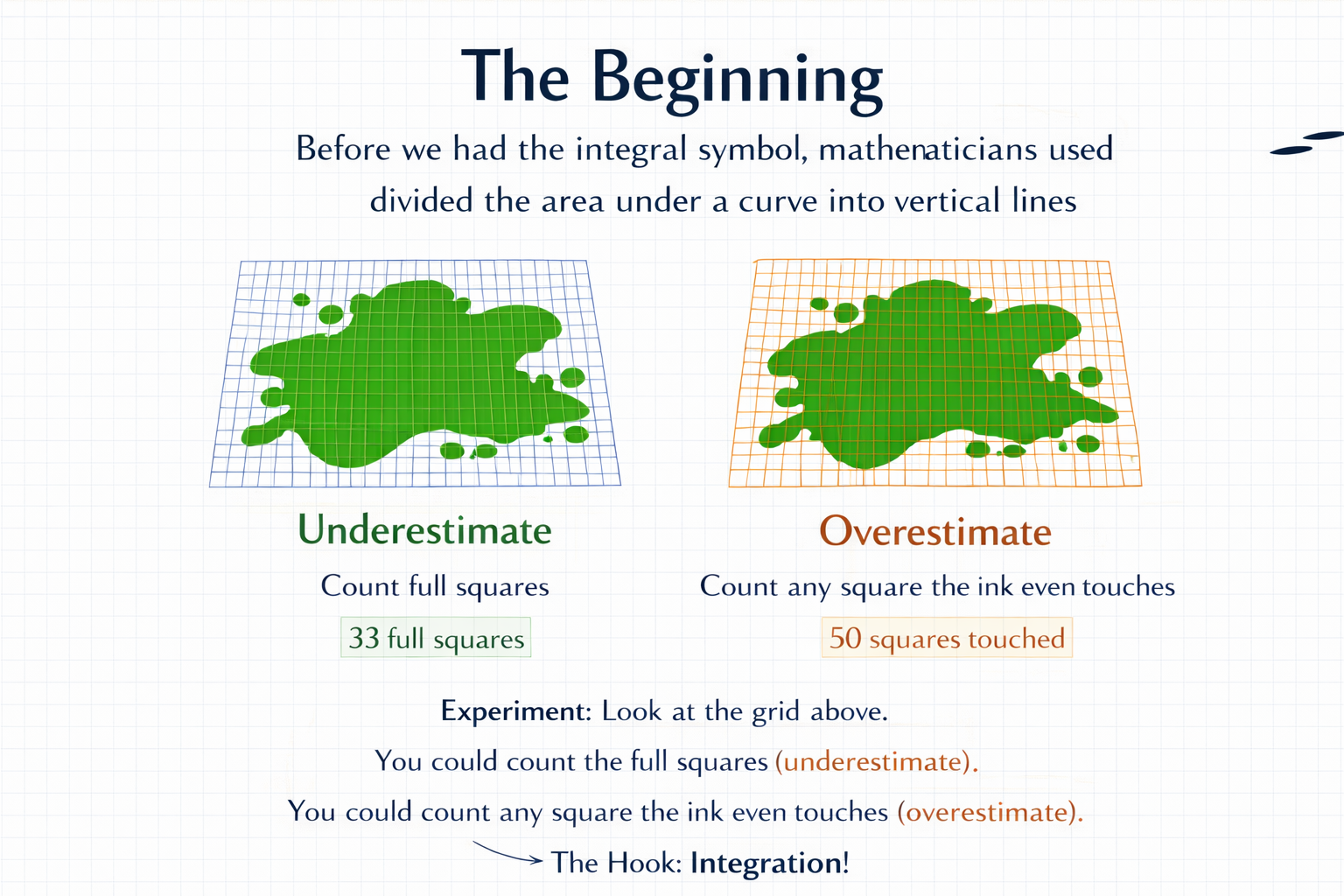
- You could count the full squares (underestimate).
- You could count any square the ink even touches (overestimate).
The Hook: Integration is the mathematical process of making those grid squares infinitely small to find the perfect area. This is called accumulation.
The Ancient Challenge
Imagine trying to measure the area of a curved garden plot or calculate how much paint you need for a dome-shaped ceiling. Ancient mathematicians faced this exact puzzle thousands of years ago, and it seemed impossible at first glance.
The Greeks knew how to find areas of simple shapes—rectangles, triangles, circles—but curves presented a completely different problem. How do you measure something that constantly changes direction? Their ingenious solution was to think of curved areas as being made up of countless tiny straight pieces, each so small that the curve looked almost flat.
This breakthrough insight—that infinite tiny parts could add up to something finite and measurable—would eventually grow into one of mathematics' most powerful tools. What started as a practical problem about measuring curved shapes became the foundation for understanding motion, growth, and change itself.
The Beginning
Before we had the integral symbol, mathematicians faced a fundamental challenge: how do you find the exact area under a curved line? Unlike rectangles or triangles with their neat formulas, curves seemed to defy simple calculation.
Ancient Greek mathematicians like Archimedes had clever ideas. They would inscribe polygons inside circles and circumscribe polygons around them, then calculate the areas of these polygons. As they used more and more sides, the polygons got closer and closer to the actual circle.
This brilliant insight—that you could approximate curved areas using simpler shapes, then make your approximation better and better—planted the seeds for what would eventually become integral calculus. The key realization was that "infinitely many infinitely small pieces" could add up to something finite and exact.
Riemann Sums: Slicing the Curve
Before we had the integral symbol, mathematicians used Riemann Sums. They divided the area under a curve into vertical rectangles.
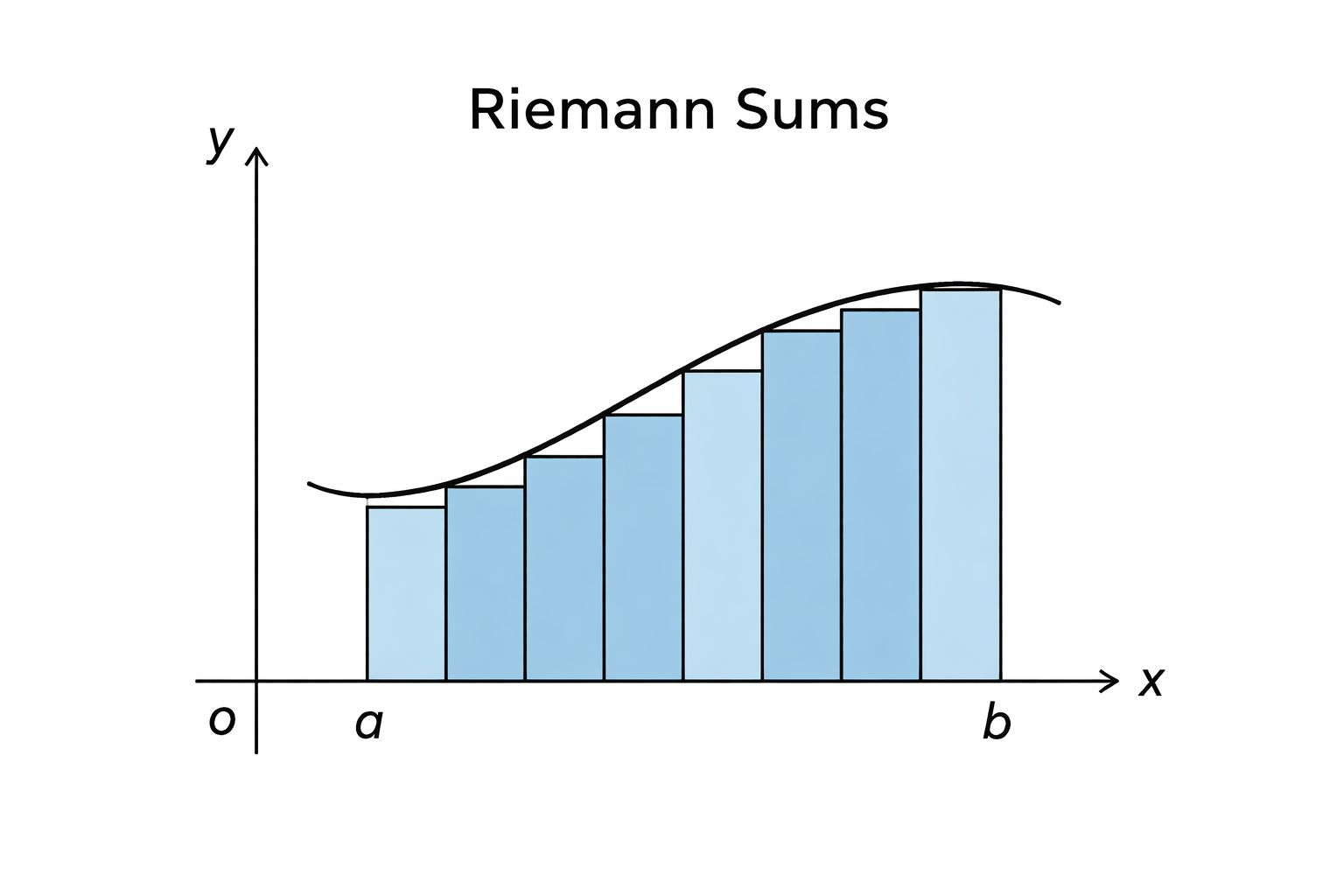
The more rectangles you use, the more accurate the area becomes. If you use infinitely many rectangles with zero width, you get the exact integral.
The Two Faces of Integration
Integration comes in two flavors: finding a general formula (Indefinite) or finding a specific value (Definite).
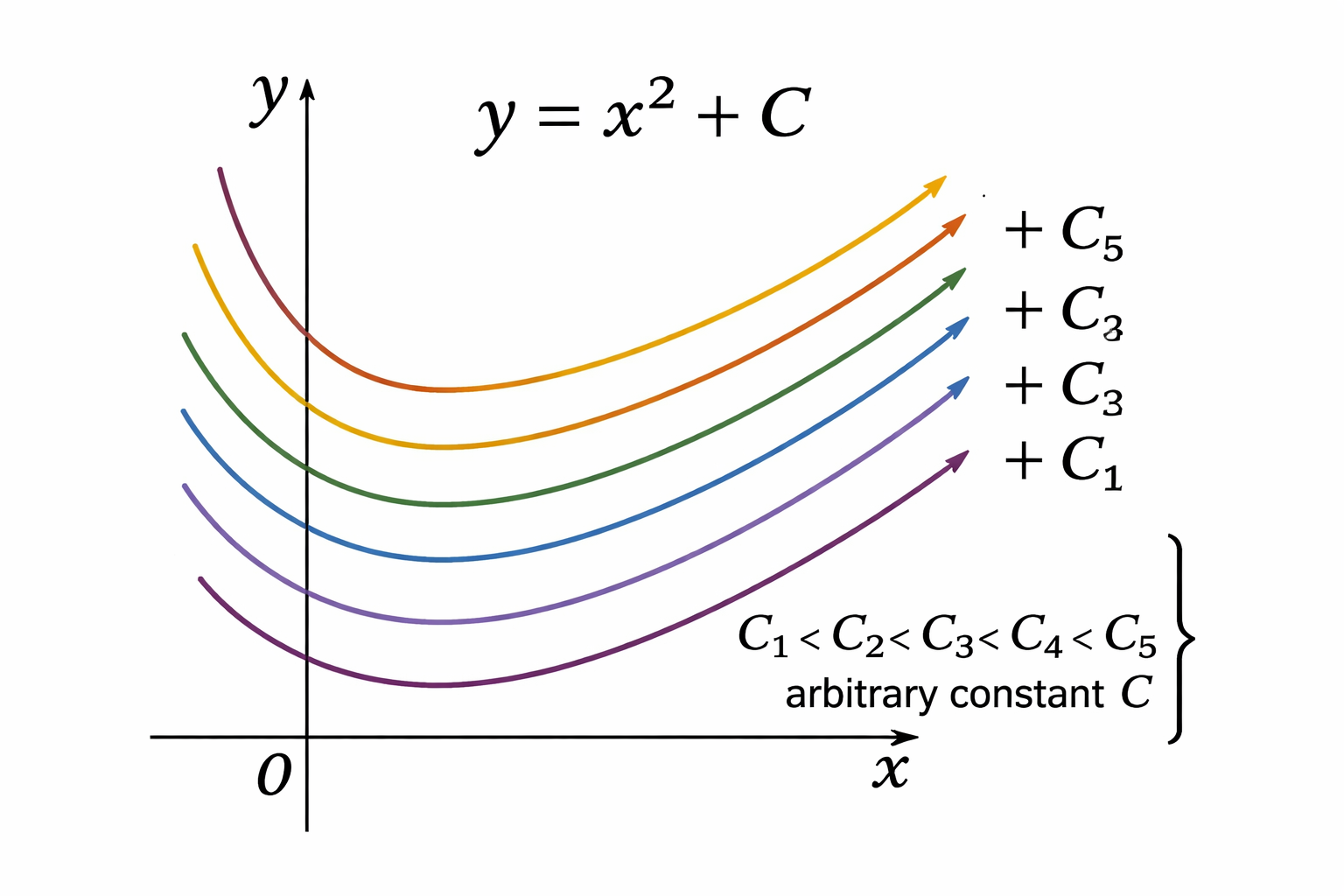
The Mystery of +C: Since the derivative of any constant is 0, when we integrate (reverse), we don't know what that constant was. We add +C to represent the "family" of possible functions.
Quick Check: The Constant

sample test
Select all correct answers (2 correct)
The Bridge: Fundamental Theorem
This theorem is the most important link in calculus. It proves that differentiation and integration are inverse operations.
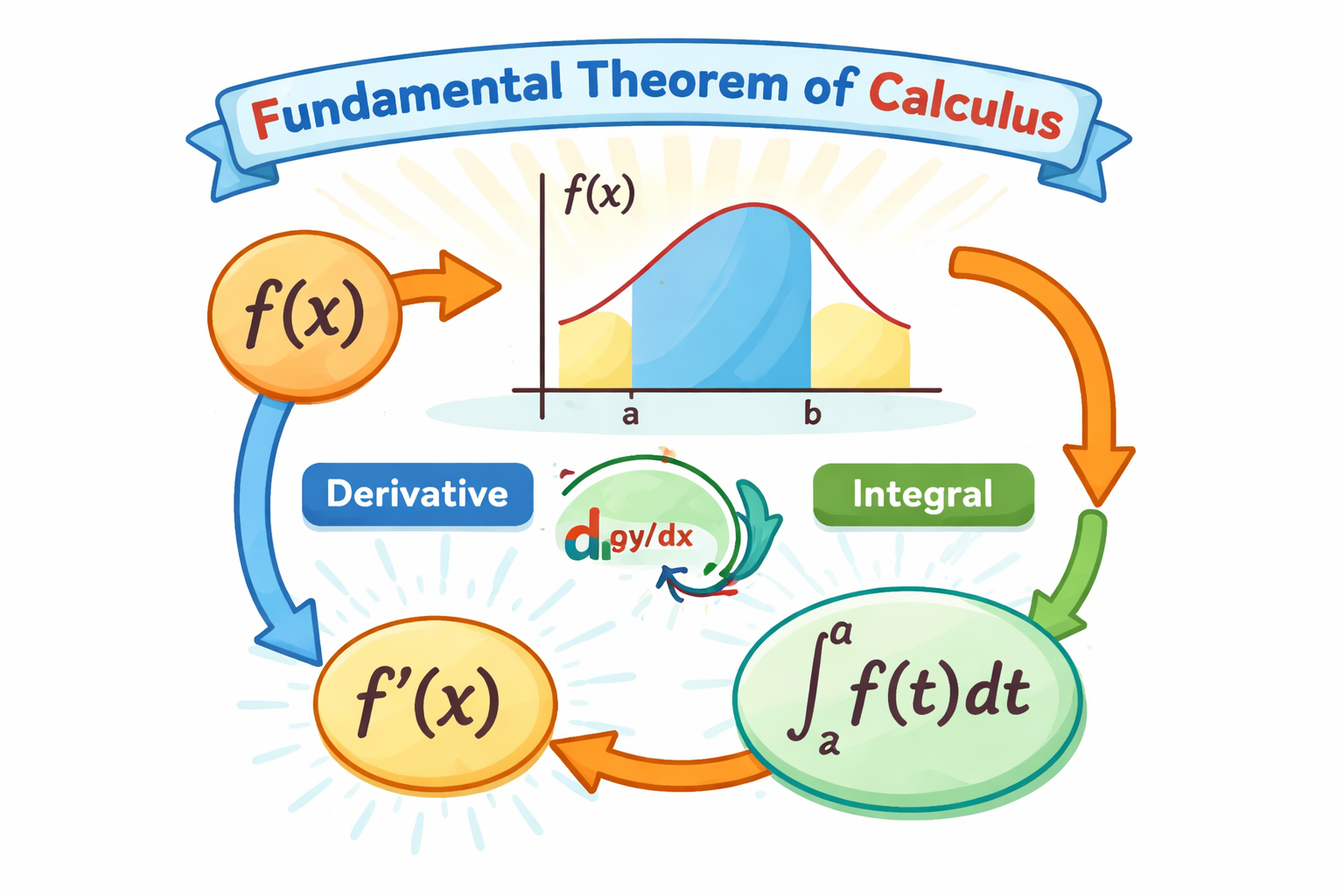
To find the area from a to b, you just find the antiderivative F and subtract its value at the start point from its value at the end point.
v2
Integration isn't just about area under a curve on a graph. It's about accumulation of any rate of change.
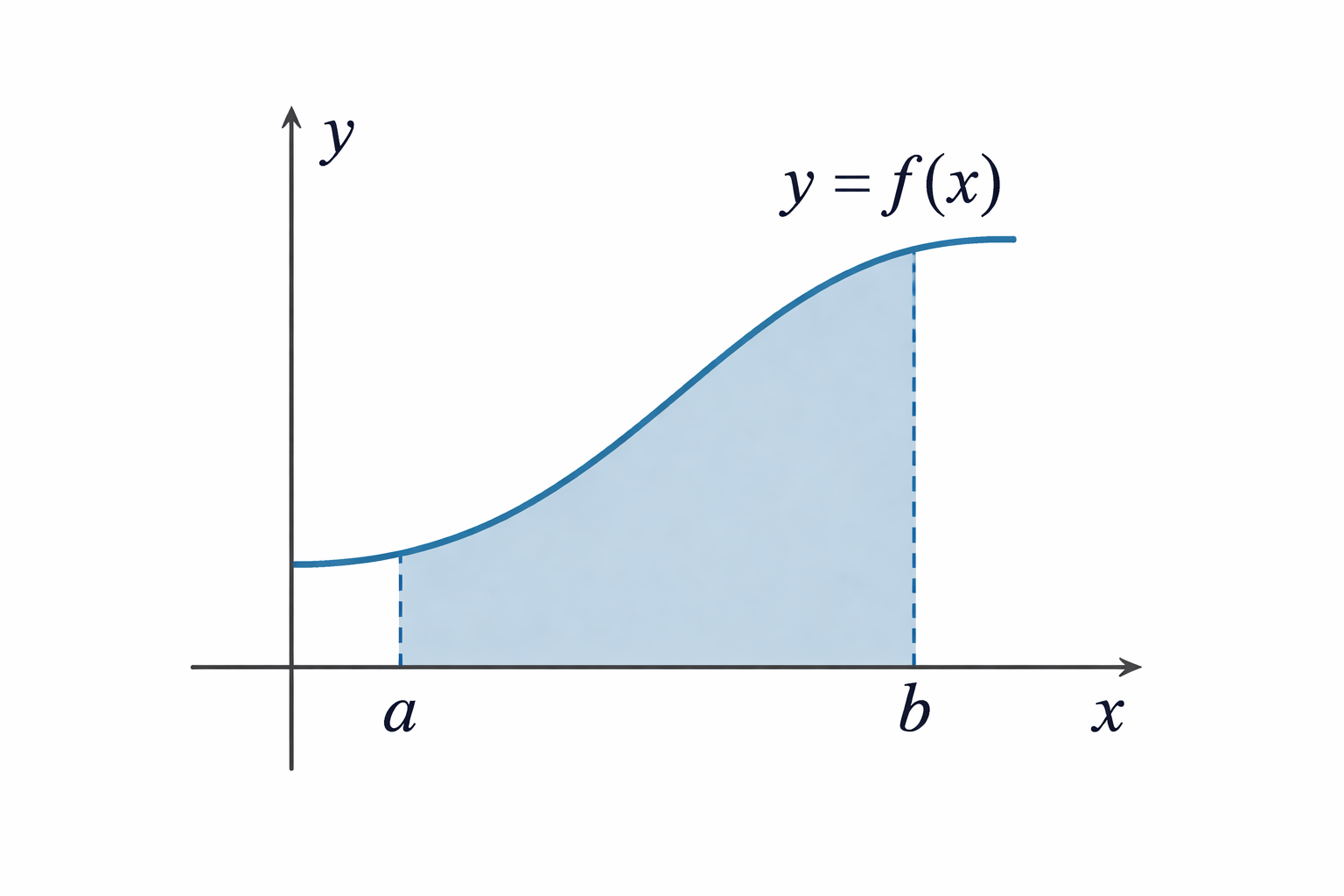
- Physics: Integrating velocity gives you total displacement.
- Economics: Integrating marginal cost gives you total cost.
- Medicine: Integrating the rate of blood flow gives you total volume delivered.
Quick Check: Applications

If you have a function representing the rate of change of a population, what does its definite integral over 10 years represent?
Lesson Summary
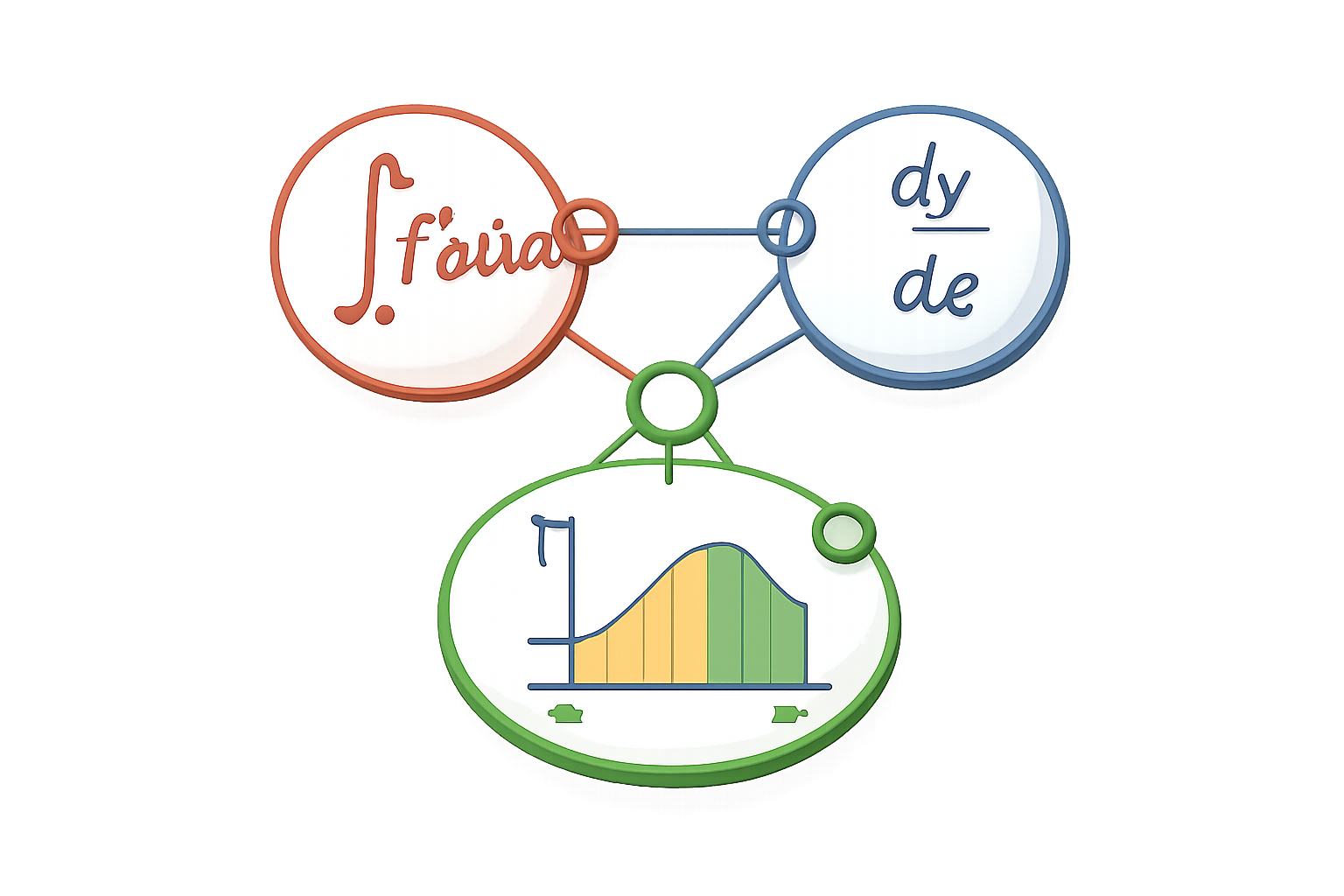
- Integration is Summation: Adding up infinite tiny slices.
- Riemann Sums: The precursor to the integral using rectangles.
- Indefinite: Gives a family of functions (+C).
- Definite: Gives a numerical value (area/accumulation).
- The FTC: The bridge between differentiation and integration.
Ready for the Protocol?

You've explored the foundations of integration. It's time to verify your mastery.
Complete the 5-question assessment to earn your certificate. Passing score: 80%.
Assessment Q1
What is the geometric interpretation of the definite integral of f(x) from a to b?
Assessment Q2
Why do we add '+ C' to an indefinite integral?
Assessment Q3
What happens to the accuracy of a Riemann Sum as the number of rectangles increases?
Assessment Q4
According to the Fundamental Theorem of Calculus, the integral of f(x) from a to b is:
Assessment Q5
If you integrate a 'velocity' function over time, what quantity do you get?